


QuickREF for 2026 MOCA-Peds Learning Objectives
QuickREF for 2026 MOCA-Peds is now available! QuickREF is a comprehensive, easily-searchable guide for the 2026 MOCA-Peds learning objectives.
2026 Learning Objectives & Featured Readings
- Apply effective communication strategies when delivering difficult news, establishing goals of care, or planning advanced or end-of-life care.
- Counsel patients and families about safety and injury prevention pertaining to infants (eg, car seats, safe sleep, secondhand smoke exposure).
- Diagnose, evaluate, and manage eating disorders.
- Recognize and evaluate findings of physical child abuse and distinguish from accidental trauma.
- Recognize and manage non-asthmatic conditions of the lower airway that can present with cough, wheezing, or respiratory distress (eg, pulmonary artery sling, bronchitis, bronchiolitis).
- Recognize and manage patients with liver and other organ failure.
- Recognize and plan the management of a child with diabetic ketoacidosis.
- Recognize barriers to detecting and reporting patient safety events.
- Recognize the presentation, differential diagnosis, evaluation, and treatment of common movement disorders in children (eg, provisional tic disorder, Tourette syndrome, restless legs syndrome).
- Recognize the presentation, evaluation, and management of genetic forms of kidney disease.
- Recognize the signs and understand the impact of neglect on children.
- Recognize, evaluate, and manage both normal and atypical growth and development of a 0- to 12-week-old infant (eg, physical, social, emotional, language, gross motor, fine motor).
- Recognize, evaluate, and manage both normal and atypical growth and development of a preschool-age child (eg, physical, social, emotional, language, gross motor, fine motor).
- Recognize, evaluate, and manage symptoms related to diseases of the esophagus (eg, dysphagia, gastroesophageal reflux disease).
- Recognize, evaluate, and treat opportunistic infections in a patient who is immunocompromised.
- Understand and manage age-appropriate medical screenings (eg, vision, hearing, blood pressure, oral health risks).
- Understand and manage pre-participation evaluations (including recognition of contraindications for participation) for athletes and counsel patients appropriately.
- Understand current immunization recommendations.
- Understand principles of infection control in various settings (eg, childcare center, school, hospital/clinic).
- Understand the clinical presentation, diagnosis, and management of common fungal infections.
- Understand the clinical presentation, diagnosis, and management of common mycobacterial infections.
- Understand the clinical presentation, differential diagnosis, evaluation, and management of constipation.
- Understand the cognitive, social, and emotional development that occurs during adolescence and its impact on decision-making.
- Understand the diagnosis, evaluation, and management of cystic fibrosis.
- Understand the differential diagnosis, evaluation, and initial management of a child with a pituitary disorder.
- Understand the differential diagnosis, evaluation, and initial management of neonates with cyanosis or respiratory distress.
- Understand the differential diagnosis, evaluation, and management of allergic rhinitis.
- Understand the differential diagnosis, evaluation, and management of autism spectrum disorder and comorbid conditions.
- Understand the differential diagnosis, evaluation, and management of coagulation disorders.
- Understand the differential diagnosis, evaluation, and management of diseases and disorders of the meninges and spinal cord (infectious, inflammatory, anatomic).
- Understand the differential diagnosis, evaluation, and management of rashes caused by or related to infections in the neonate.
- Understand the differential diagnosis, evaluation, and management of syncope.
- Understand the differential diagnosis, evaluation, and management of testicular scrotal mass (eg, varicocele, tumor).
- Understand the familial risk factors, diagnosis, and management of dyslipidemias.
- Understand the medical risks and complications unique to newborn size or gestational age (eg, small for gestational age, large for gestational age, late preterm, etc).
- Understand the presentation, differential diagnosis, and evaluation of connective tissue disorders that present with hypermobility (eg, Ehlers-Danlos syndrome, Marfan syndrome, benign hypermobility syndrome).
- Understand the presentation, evaluation, and care of patients with specific gene mutations (eg, fragile X syndrome, Marfan syndrome, achondroplasia).
- Understand the presentation, evaluation, and management of acne.
- Understand and evaluate nonbinary and transgender adolescent patients.
- Understand, evaluate, and manage nutritional needs for patients with dietary restrictions (eg, vegetarian, vegan, gluten free).
- Understand, evaluate, and manage orthopedic disorders and injuries of the elbow (eg, nursemaid’s elbow, medial epicondyle apophysitis).
- Understand, evaluate, and manage psychosocial issues related to the impact of illness (eg, chronic illness/disability).
- Understand, evaluate, and manage structural/anatomic diseases, disorders, and conditions of the ear.
- Understand, evaluate, and manage structural/anatomic diseases, disorders, and conditions of the eye.
- Understand, evaluate, and manage trauma/injury of the mouth, oropharynx, and throat.
Banerji A, Solensky R, Phillips EJ, Khan DA. Drug Allergy Practice Parameter Updates to Incorporate Into Your Clinical Practice. J Allergy Clin Immunol Pract. 2023 Feb;11(2):356-368.e5. doi: 10.1016/j.jaip.2022.12.002. Epub 2022 Dec 20. Review. PubMed PMID: 36563781.
https://pubmed.ncbi.nlm.nih.gov/36563781/
Reynolds RV, Yeung H, Cheng CE, Cook-Bolden F, Desai SR, Druby K, Freeman EE, Keri JE, Stein Gold LF, Tan JKL, Tollefson MM, Weiss JS, Wu PA, Zaenglein AL, Han JM, Barbieri JS. Guidelines of Care for the Management of Acne Vulgaris. J Am Acad Dermatol. 2024 Jan 30;. doi: 10.1016/j.jaad.2023.12.017. [Epub ahead of print] PubMed PMID: 38300170.
https://pubmed.ncbi.nlm.nih.gov/38300170/
The American Psychiatric Association Practice Guideline For The Treatment Of Patients With Eating Disorders, Fourth Edition.
https://psychiatryonline.org/doi/book/10.1176/appi.books.9780890424865
- Regular price
-
$349.00 - Regular price
-
- Sale price
-
$349.00
Couldn't load pickup availability
Return Policy
QuickREF and all digital products are non-refundable.
Read our return policy.
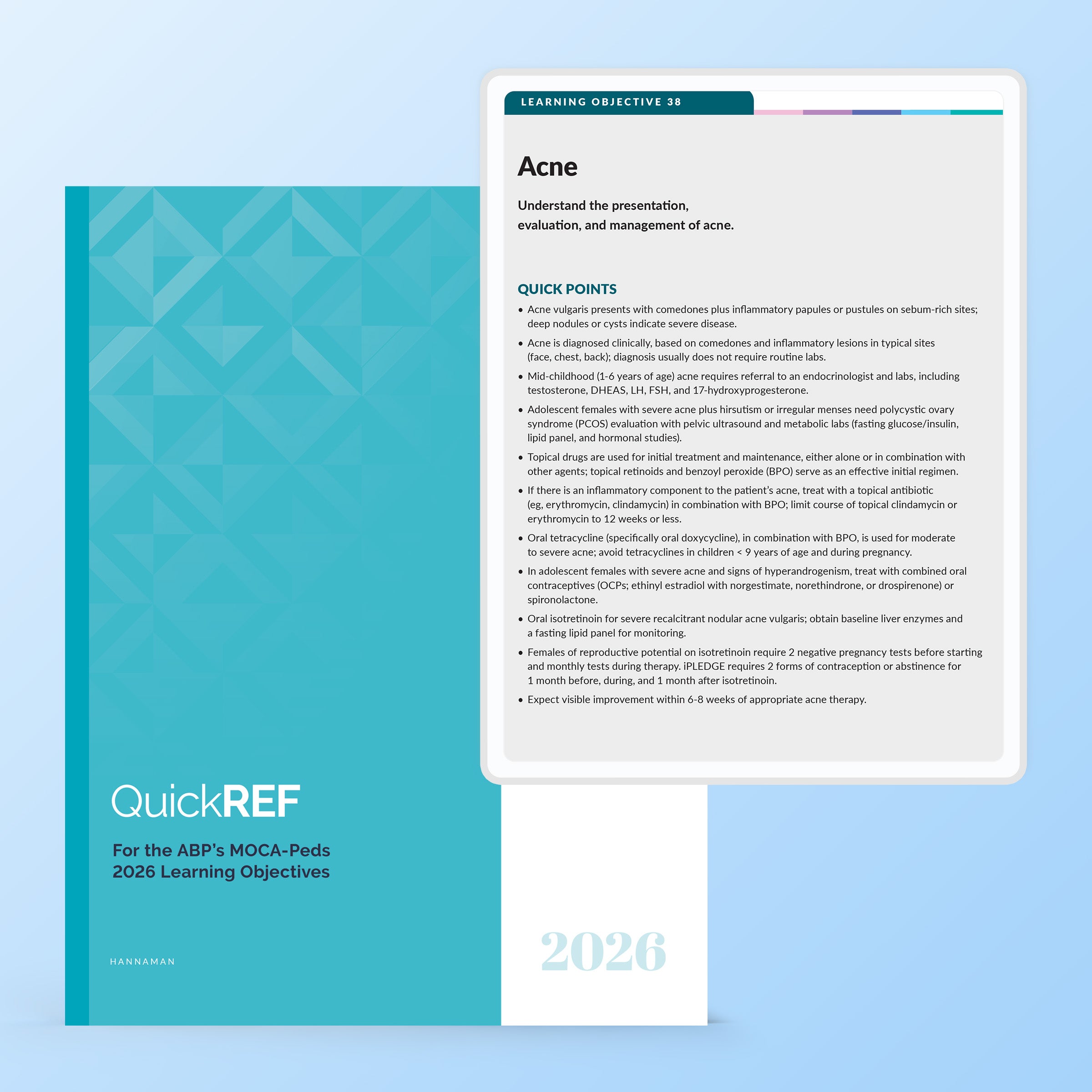



QuickREF for 2026 MOCA-Peds Learning Objectives
- Regular price
-
$349.00 - Regular price
-
- Sale price
-
$349.00
The most efficient way to prepare for and ace MOCA-Peds
-
Easy to search and find information fast
-
Comprehensively covers all 45 learning objectives
-
Made for busy physicians
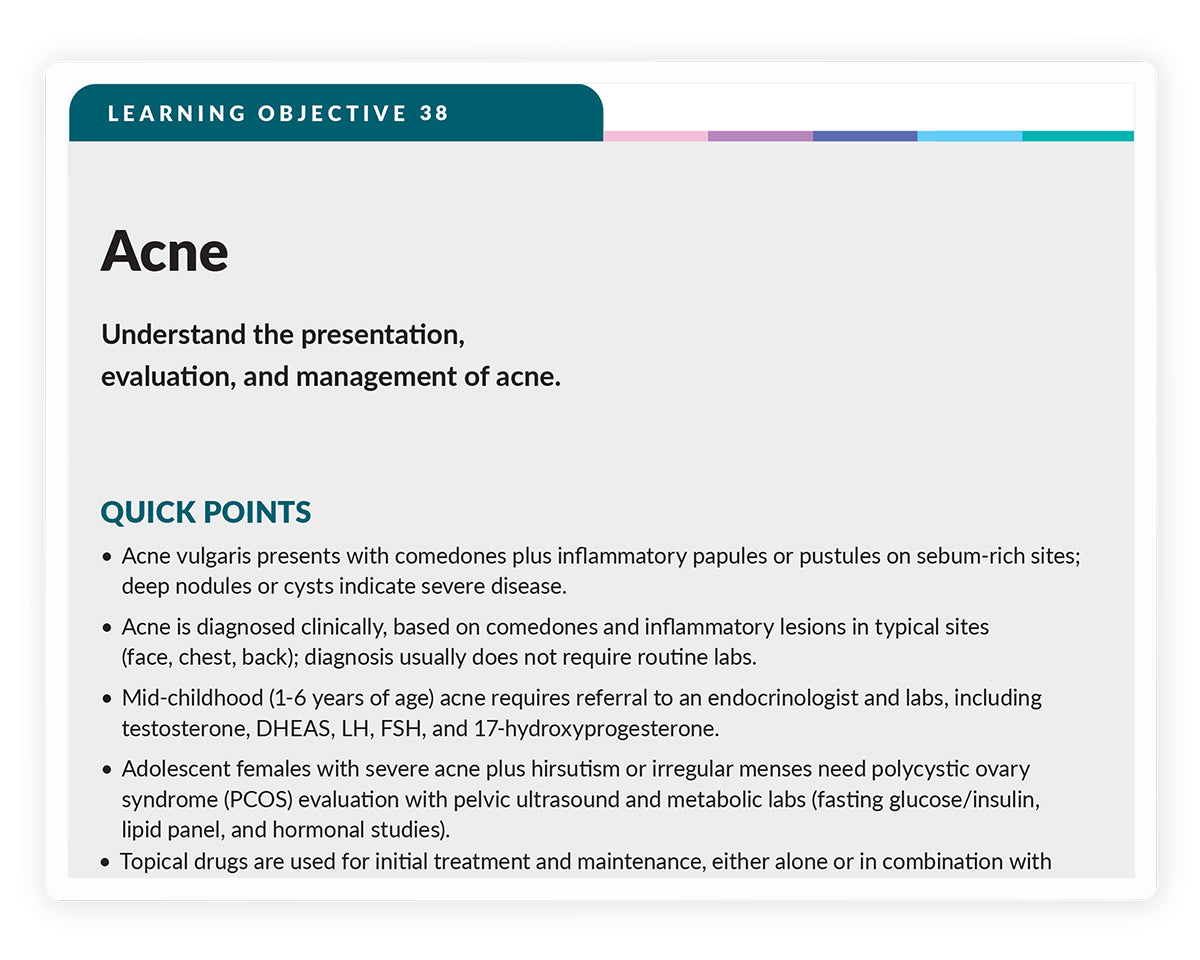
Quick points
See must-know points for each learning objective
Each section begins with the highest-yield points for that learning objective.
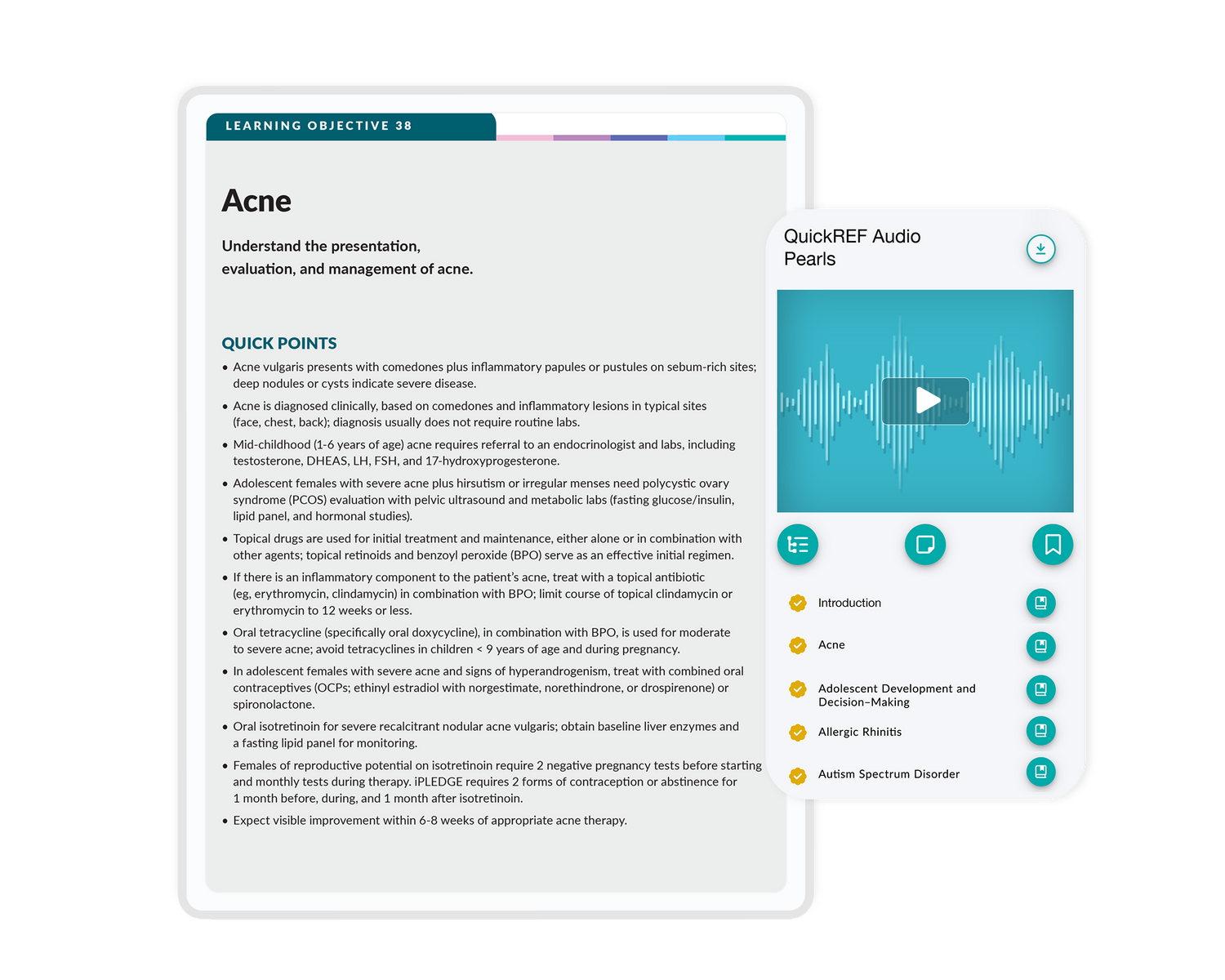
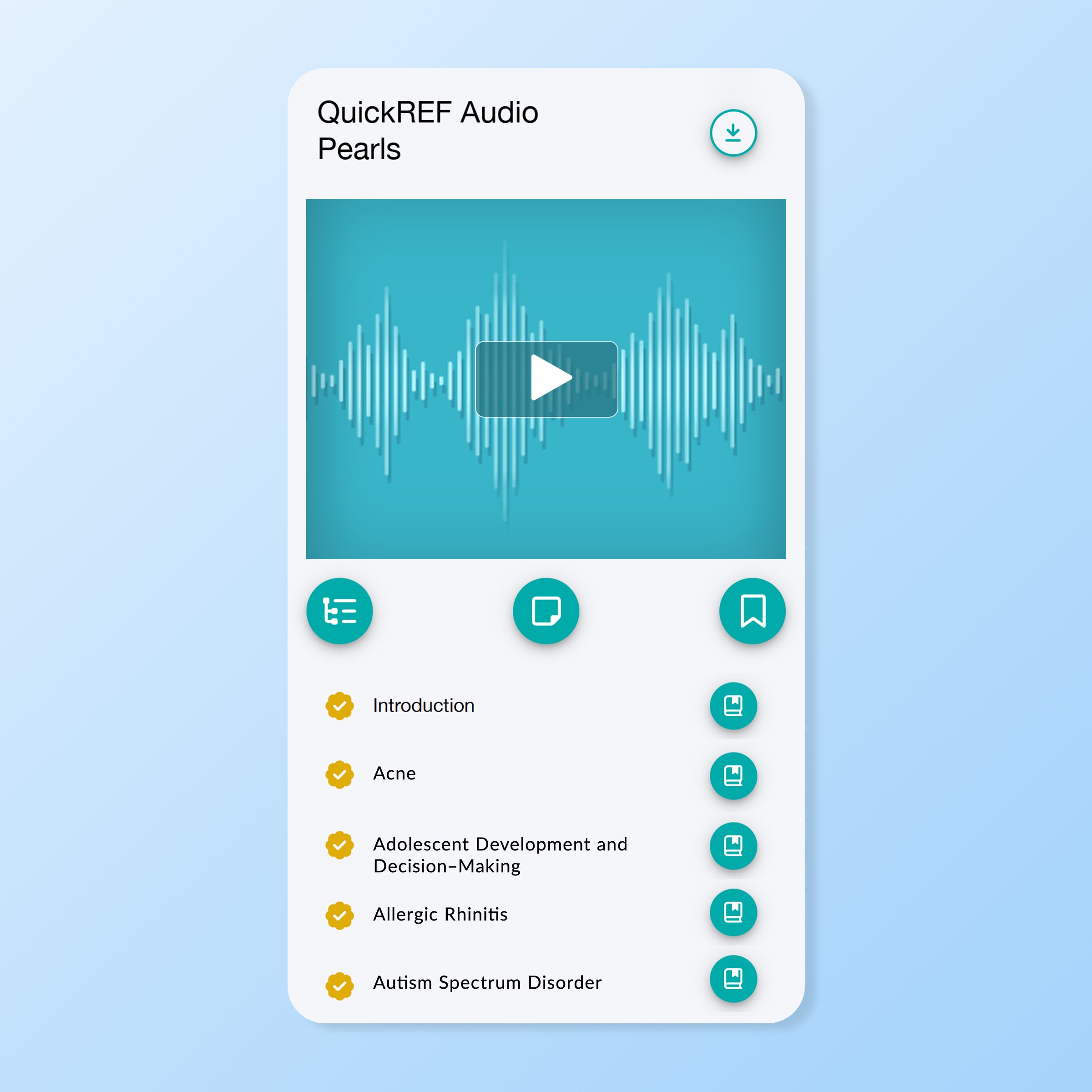
Quickref audio
Listen to a conversational summary of each learning objective
Audio lectures that summarize the diagnosis, treatment, and management for each learning objective.
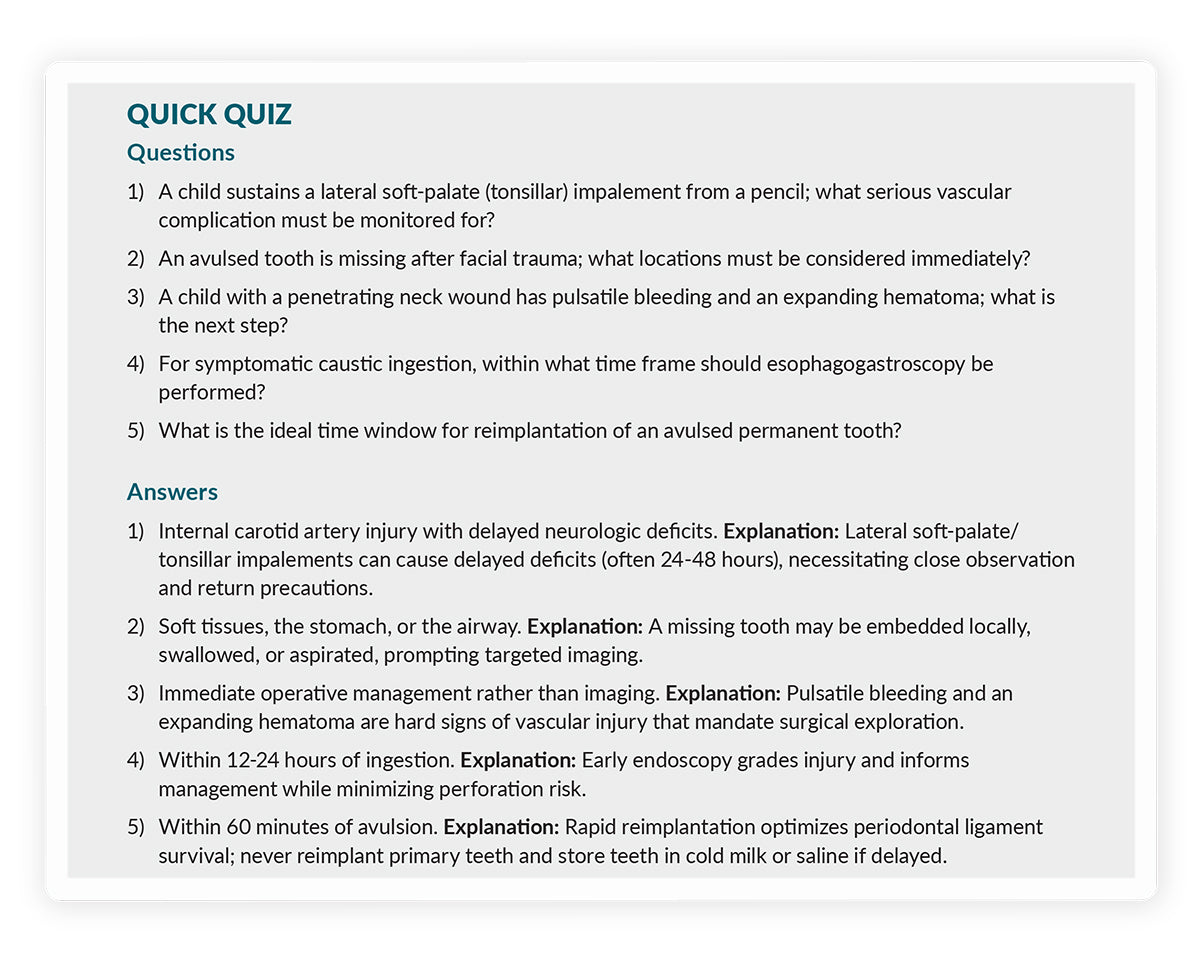
Quick quiz
Check your understanding as you go
Short quizzes built into each learning objective help you review key points and reinforce what you've just learned.
Flip through and listen to a sample from the 2026 QuickREF
Get One FREE Learning Objective from the 2026 QuickREF for MOCA-Peds
Our quick reference guide covers every learning objective and featured reading for 2026 MOCA-Peds. Sign up to receive a free trial of learning objective 38: Acne: Understand the presentation, evaluation and management of acne.
An excellent dissection of the topics
Comprehensive and easy to read
It's format has been improved. It is esear to read. I love it.
Easy to follow
I liked the addition of the question/ answer section with each topic.